Many children today can spend hours playing video games every day. But with the right guidance through STEM education and programming, that same child can become the creator of the very games they love.
This is where an interesting divide begins to appear: Team Playing Games vs. Team Making Games. The difference is not simply about entertainment. It reflects how children interact with technology — either as passive consumers or as active creators.
Team Playing Games – When Children Consume Technology
This is a familiar reality for many families today. Children grow up surrounded by games, digital devices, and online entertainment. They become highly skilled at navigating virtual environments, mastering levels, and understanding game mechanics.
From the perspective of STEM education and programming, however, this is only the first stage of technological exposure. At this level, children are mainly using products that others have created.
A child may become very good at playing games, yet still not understand:
- How a game is actually built
- The logic and algorithms behind movements and interactions
- How characters respond to the environment through programming
- The systems that make digital experiences work
Without deeper exposure to technology creation, children often remain passive users in the digital world rather than active innovators.
Team Making Games – When Children Become Creators
This is the direction modern education is increasingly moving toward, especially through STEM education and programming.
Instead of only playing games, children begin learning how games work behind the scenes. They are introduced to logical thinking, algorithms, structured problem-solving, and computational thinking.
More importantly, children are empowered to:
- Design their own characters and virtual worlds
- Build game rules and mechanics
- Create personalized technology projects
- Transform creative ideas into real digital products
In a STEM learning environment, education becomes more than memorizing information. It becomes a hands-on journey where children:
- Experiment continuously
- Learn through trial and improvement
- Think like real developers and innovators
This process helps children build confidence, creativity, and resilience while developing future-ready skills.
Why STEM Education and Programming Matter Today
Artificial intelligence, robotics, and automation are no longer concepts of the future. They are already shaping everyday life. As the world changes rapidly, the way we prepare children for the future must evolve as well.
Today, STEM education and programming are becoming foundational skills for the next generation. They act as a new “language” that helps children understand, adapt to, and confidently navigate the digital world around them.
According to educational research highlighted by Edutopia, children exposed to STEM learning at an early age often demonstrate stronger abilities in:
- Logical problem-solving
- Critical thinking
- Creativity and innovation
- Independent learning
- Adaptability in changing environments
Most importantly, children begin to see technology not as something complicated or distant, but as a tool they can use to create meaningful value.
How OneSpace Helps Children Become Future Creators
At OneSpace, online programming courses are designed around one clear philosophy:
Do not separate children from technology — teach them how to master it.
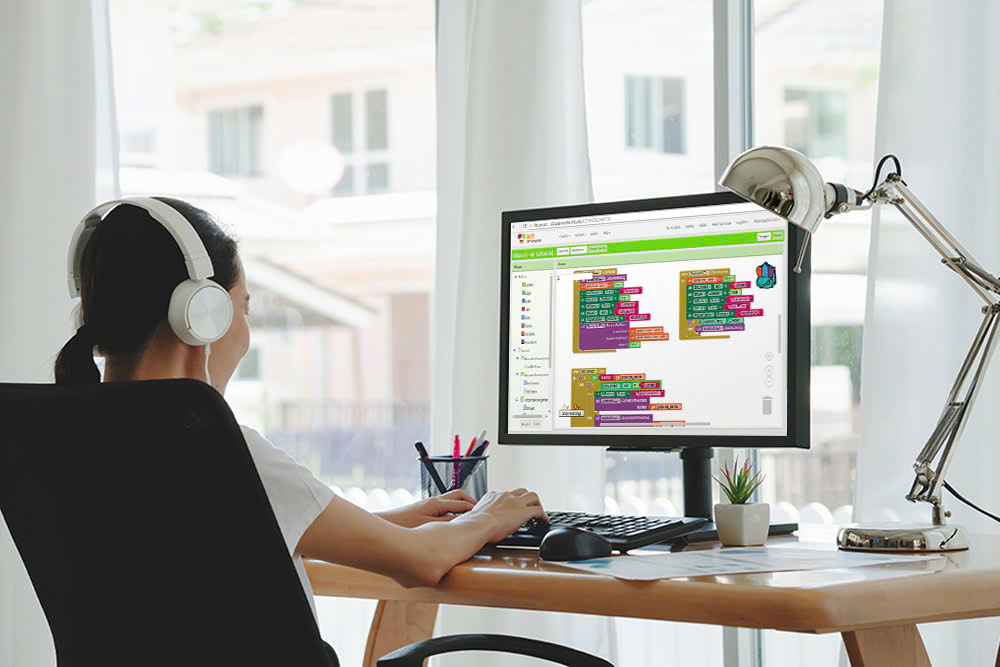
Instead of relying on dry theoretical lessons, OneSpace creates an engaging, project-based learning environment where students can:
- Build simple games and digital products with their own hands
- Learn through real-world projects and practical experiences
- Develop programming thinking naturally from beginner to advanced levels
- Gradually build a personal technology portfolio
The most valuable outcome is not only technical knowledge, but a transformation in mindset:
From player → to understanding → to creator.
Learn More About OneSpace’s STEM Learning Approach: OneSpace STEM Education Solutions
STEM Education and Programming Help Children Take Ownership of Their Future
In today’s technology-driven world, every child interacts with games and digital platforms in some way.
STEM education and programming do not necessarily turn every child into a software engineer. However, they do help children become proactive thinkers, problem-solvers, and creators who are prepared for the future.
The goal is not simply to teach children how to use technology — but to help them understand, shape, and create with it.